
PMA Hero

Promoting Peaceful Resolution
Through Dialogue,
Understanding & Respect

We promote mediation as an effective, efficient, confidential, and collaborative alternative to traditional litigation.

Through structured dialogue and professional facilitation, we help individuals, families, businesses, and institutions resolve conflicts amicably — while preserving relationships and reducing time, cost, and stress.

Confidential & Private

Your discussions remain fully secure and protected.

Faster Resolution

Resolve disputes in days or weeks instead of months.

Cost-Effective Solution

Avoid expensive legal fees and lengthy court battles.

PMA at a Glance

Founded
2013–14
Pakistan’s First Mediation Association
2000+
Successful Mediations
& Facilitation Cases
100+
Certified Mediators
Across Pakistan
100+
Training Programs
Delivered
National Impact
Advancing ADR
Awareness & Policy Reform
About PMA
0+
YEARS
Promoting Mediation
Excellence
  • About PMA
  • Our Vision
  • Our Mission
  • Our Impact
  • About PMA

    PMA (Pakistan Mediators Association) is an independent institution established to promote peaceful dispute resolution through mediation and Alternative Dispute Resolution (ADR) across Pakistan.
    With internationally accredited mediators and trainers, PMA works actively to advance mediation awareness, professional training, institutional ADR development, and policy advocacy.
    Our mission is to create accessible, confidential, and effective conflict resolution systems that help individuals, businesses, organizations, and communities resolve disputes efficiently while preserving relationships and reducing unnecessary litigation.

  • Our Vision

    To establish mediation as the leading and most trusted method of dispute resolution in Pakistan, promoting a culture of constructive dialogue, mutual understanding, and peaceful coexistence.

  • Our Mission

    • To promote mediation as an accessible and effective dispute resolution mechanism
    • To train and accredit mediators in line with international standards
    • To collaborate with courts, government institutions, and private sectors
    • To raise awareness about the benefits of mediation across society
  • Our Impact

    PMA has successfully trained hundreds of lawyers, Judges, professionals and has played a key role in promoting court-connected mediation initiatives in Pakistan.

    We continue to work closely with the judiciary and stakeholders to strengthen mediation as a sustainable dispute resolution system.

Need Our Services?

Call: +92 308 203 4561

Opening Hours

Mon-Fri (9am to 5pm)

Email Us

info@pma.org.pk
pmamediators@gmail.com
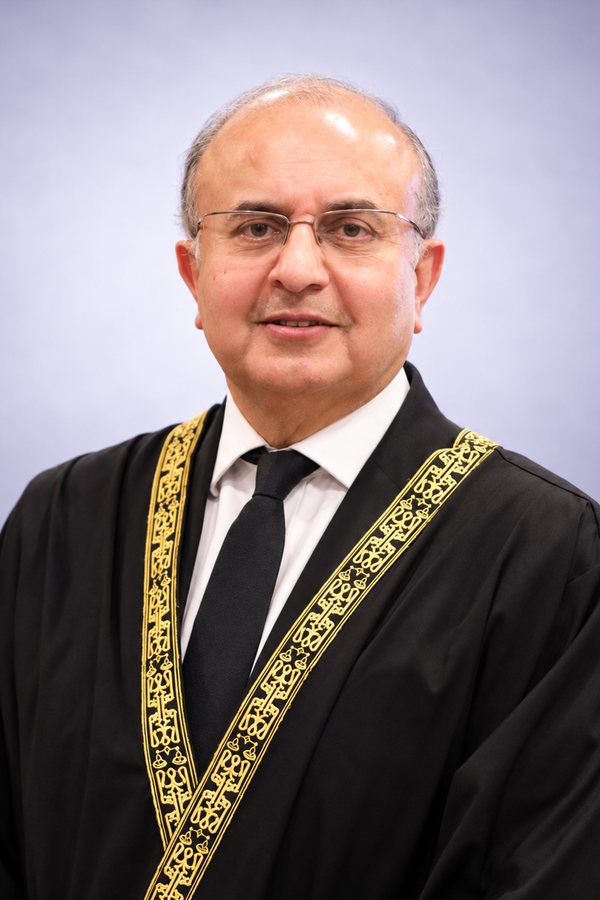
Honourable Justice (Retd.) Syed Mansoor Ali Shah

PMA welcomes Honourable (R) Justice Syed Mansoor Ali Shah as Patron-In-Chief

Pakistan Mediators Association is honoured to welcome Honourable Justice (Retd.) Syed Mansoor Ali Shah as its Patron-in-Chief.

We look forward to his guidance as we advance mediation, strengthen professional standards, and bring peaceful dispute resolution closer to the community.

View Profile

Our mission must be simple: resolve disputes, restore relationships, and help people move on with their lives.

A Message from Our Patron-in-Chief

For the ordinary Pakistani, ADR is not merely an alternative to litigation — it can be a lifeline. A person trapped in the courts for years, sometimes a generation, needs another way to resolve a dispute, find closure and move forward with life. Mediation can provide that way.

I believe PMA can play a transformative role in alleviating the misery of ordinary people by taking dispute resolution beyond the courtroom and closer to the community.

Our mission must be simple: resolve disputes, restore relationships, and help people move on with their lives.

PMA will work to provide solutions, reduce conflict and help build a more peaceful, resilient and stronger society.

Honourable Justice (Retd.) Syed Mansoor Ali Shah
Patron-in-Chief | Pakistan Mediators Association

Together, advancing mediation and access to justice.

What is Mediation?

Mediation is a voluntary, confidential, and structured process where a neutral mediator helps the parties in conflict to communicate, understand each other's perspectives and reach a mutually acceptable solution.

It empowers the parties to shape the outcome, preserves relationships and saves time, cost and emotional stress.

Understand the Mediation Process

Why Choose PMA?

We combine international standards with local understanding to deliver ethical, effective, and sustainable ADR solutions.

Learn More About PMA

International Standards

We follow globally recognized mediation principles and practices.

Experienced & Certified Mediators

Our panel includes highly trained and accredited professionals.

Confidential Process

Your privacy is our top priority at every stage.

Faster & Amicable Outcomes

We help resolve disputes efficiently and effectively.

Cost Effective

A practical alternative to expensive and lengthy litigation.

Professional Training & Accreditation

PMA provides internationally aligned mediation training and professional development programs designed for lawyers, corporate professionals, HR teams, educators, and aspiring mediators.
Our workshops and certification programs focus on practical dispute resolution skills, negotiation strategies, communication, and ADR frameworks.

IMI Accreditation
Expert Trainers
Practical Learning
Global Standards

Our training programs meet international standards and empower professionals to become effective, ethical, and globally competent mediators.

Explore Training Programs

Our Core Services

Commercial & Corporate Mediation

Resolving business, partnership, contractual, and commercial disputes efficiently.

Court-Referred Mediation

Alternative dispute resolution support for court-connected matters.

Family & Community Mediation

Helping families and communities resolve disputes peacefully and respectfully.

Workplace & Organizational Disputes

Addressing internal workplace conflicts and organizational disagreements.

IMI-Certified Mediator Training

Professional mediator certification and skills development programs.

Workshops & Awareness Programs

Educational sessions promoting ADR awareness and conflict resolution culture.

Institutional & Policy Advisory

Supporting institutions in building ADR systems and mediation frameworks.

0+
Mediations Facilitated
0%
Successful Resolutions
Confidential
100% Private Process
Certified
Trained Mediators

Our Partners

Sindh High Court

Govt. Institutions

International Mediation Institute

Let's Talk Because We Can.

Ready to resolve your dispute peacefully? Or interested in becoming a certified mediator? Contact Us Today

Chat instantly with our team
Scroll to top

Patron-in-Chief's Profile

Jurist · Constitutional Scholar · International Arbitrator & Mediator

Justice (Retired) Syed Mansoor Ali Shah is one of Pakistan’s most distinguished jurists — a constitutional thinker, reformer, and international arbitrator whose career has spanned the highest reaches of the country’s judiciary and an increasingly global academic life. He served as Senior Puisne Judge of the Supreme Court of Pakistan and as Chief Justice of the Lahore High Court, and is today the Distinguished Chair in Constitutionalism and Justice and Professor of Practice at the Shaikh Ahmad Hassan School of Law (SAHSOL) at LUMS. In 2026 he joins Yale Law School as the Oscar M. Ruebhausen Distinguished Visiting Fellow, and in 2027 he will serve as the Bok Visiting International Professor at the University of Pennsylvania’s Carey Law School. An international arbitrator and mediator accredited by CEDR in London, he is also an Honorary Bencher of Lincoln’s Inn. Across more than sixteen years on the bench, he has been widely recognised as a leading voice in constitutional law, judicial independence, international arbitration, human rights, gender equality, environmental and climate justice, child justice, commercial law, and judicial innovation, pioneering reforms aimed at strengthening judicial independence, efficiency, accessibility, transparency, and institutional integrity.

His formative education began at Aitchison College in Lahore, after which he read law and economics at the University of the Punjab, earning an LL.B. and an M.A. in Economics, before proceeding to the University of Cambridge, where he took an LL.B. and an M.A. in Law. Before his elevation to the judiciary in 2009, he was a founding partner of Afridi, Shah & Minallah, where he built a flourishing practice in corporate, constitutional, and commercial litigation. On joining the bench he voluntarily relinquished private practice, marking the commencement of full-time public service.

It was on the bench that Justice Shah’s distinctive jurisprudence took shape. A reformist jurist and global speaker, he became a key architect of Pakistan’s modern frameworks on arbitration, mediation, and alternate dispute resolution (ADR), and a driving force behind the digital transformation of the judiciary. His judgments reflect a pronounced pro-arbitration and pro-mediation orientation: on the Supreme Court he authored landmark decisions that established a pro-arbitration jurisprudence and strengthened the enforcement of foreign arbitral awards, consistently favouring an arbitration-friendly interpretation that limits undue judicial interference. His approach to rights was equally deliberate — gender-sensitive and grounded in dignity and equality — and through it he strengthened constitutional protections for minorities, persons with disabilities, children, and other marginalised communities. He advanced climate justice, child justice, digital rights, and electoral justice as integral constitutional commitments, and his electoral jurisprudence affirmed political participation and the sanctity of the vote as foundational constitutional entitlements, safeguarding citizens’ right to fair political participation. He consistently advocated the integration of scientific knowledge into judicial reasoning, particularly in environmental and criminal law, and, as a pioneer of judicial innovation, authored Pakistan’s first Supreme Court judgment on Artificial Intelligence, emphasising the ethical and responsible use of emerging technologies to enhance efficiency, transparency, and access to justice while safeguarding constitutional values.

Many of these commitments were first institutionalised during his years at the Lahore High Court, where he served as a Judge from 2009 to 2016 and as Chief Justice from 2016 to 2018. There he founded Pakistan’s first court-annexed mediation centres, institutionalising ADR across Punjab, and introduced Model Civil and Criminal Courts together with modern case-management systems. In collaboration with the Punjab Information Technology Board (PITB) he developed the judiciary’s first Enterprise IT System; he reformed judicial education by restructuring the Punjab Judicial Academy; he established the Lahore High Court Research Centre (LHCRC); and he laid the foundation for data-driven performance evaluation, human-resource reforms, and gender-inclusive court environments.

His contribution to arbitration and dispute resolution extends well beyond the courtroom. As Chair of the National Arbitration Law Committee from 2023 to 2024, he led the drafting of Pakistan’s modern Arbitration Bill, aligned with the UNCITRAL Model Law. He institutionalised mediation within the judiciary through court-annexed mediation centres, introduced ADR modules into judicial training and capacity-building programmes, and — as an accredited CEDR mediator — has remained an active participant in international ADR dialogue.

In November 2025, Justice Shah resigned from the Supreme Court of Pakistan in fidelity to the Constitution and in defence of judicial independence. He observed that to continue serving in a court deprived of its constitutional jurisdiction would amount to acquiescence in a constitutional wrong, and that stepping aside was the only honest way of honouring his judicial oath. Although next in line to assume office as the forty-fifth Chief Justice of Pakistan, he had been excluded through the controversial Twenty-Sixth Constitutional Amendment, the constitutionality of which remains under judicial challenge.

Justice Shah’s influence is increasingly international. Beyond his appointments at LUMS, Yale, and Penn, he serves as a Judicial Member of the Global Judicial Institute on the Environment in Brazil, a member of Yale University’s Global Constitutionalism Program, and was a member of Pakistan’s Rhodes Scholarship Committee from 2019 to 2024; he is also associated with SIFFoC in the United Kingdom on specialised commercial courts. A widely travelled speaker on constitutionalism, arbitration, climate justice, and judicial reform, he has lectured at Harvard, Yale, New York University (in both New York and Abu Dhabi), the University of Chicago, Humboldt University in Germany, and IE University in Spain, and he represented Pakistan at COP-28 in Dubai and COP-29 in Baku, where he highlighted the country’s progressive climate-justice jurisprudence. In 2016, Pope Francis invited him to the Pontifical Academy of Sciences in Vatican City for a high-level dialogue on climate change and moral responsibility.

As an author and thought leader, Justice Shah has produced numerous landmark judgments, reports, and scholarly writings on constitutional law, climate justice, alternate dispute resolution, judicial independence, electoral rights, and court modernisation. Among his reports is The Rude Awakening (2010), the Report of the Judicial Flood Inquiry Tribunal examining the causes of the major breaches in the River Indus during the exceptional floods of that year. His areas of expertise span international arbitration and mediation; constitutional and administrative law; human rights, gender equality, and minority and disability rights; environmental and climate justice; child justice and electoral law; artificial intelligence and judicial technology; and judicial reform and governance.

Away from the bench and the lectern, Justice Shah is an avid golfer who also enjoys tennis, padel, and cycling, as well as reading, writing, travel, and music.

Taken together, his career unites more than sixteen years of judicial authority at the highest levels of Pakistan’s judiciary with a global arbitration vision backed by legislative-reform leadership, accredited mediation expertise and the institutional development of ADR, and a climate-resilient, gender-sensitive, child-centred, and minority-inclusive jurisprudence. To these he adds the pioneering use of artificial intelligence in judicial reasoning, an extensive record of global academic and policy engagement, and — above all — a principled commitment to constitutionalism, demonstrated most powerfully by his resignation in defence of judicial independence.

Contact & Resources